Christina Trevanion reflects on three exceptional pieces sold in Trevanion Auctioneers’ two day September auction.
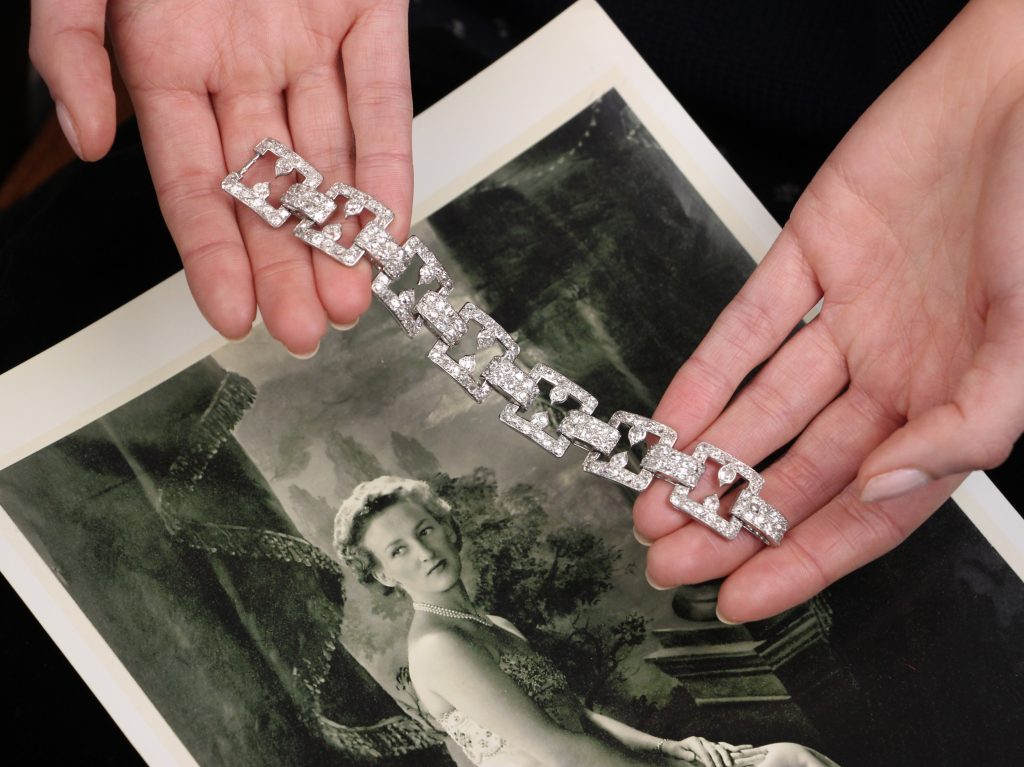
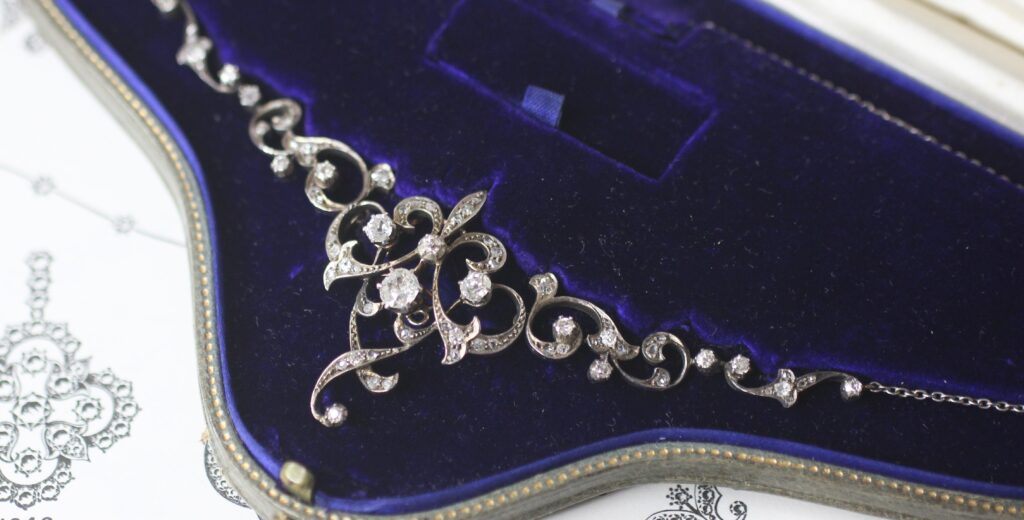
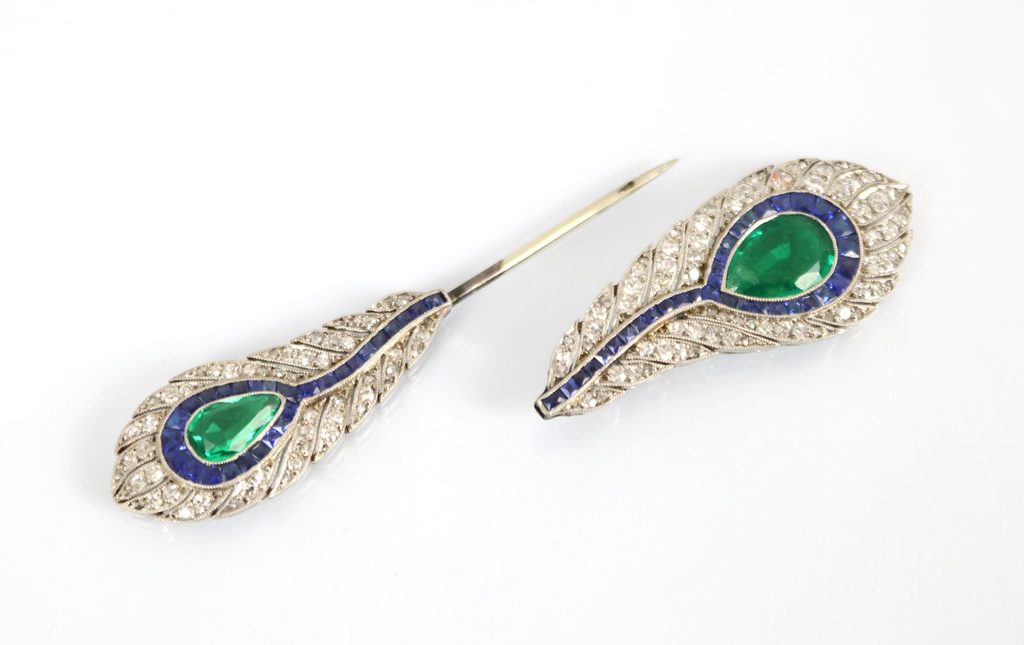
In over two decades of working in the auction industry, I’ve rarely used the word ‘exceptional’ in a catalogue description. One of the first rules of cataloguing is that descriptions should be factual and non-emotive, so superlatives are usually avoided. But that all changed when an exquisite Art Deco diamond, emerald and sapphire-set jabot pin in the form of peacock feathers was consigned for our September auction. It really was exceptional, so I had no choice but to say so when cataloguing it!
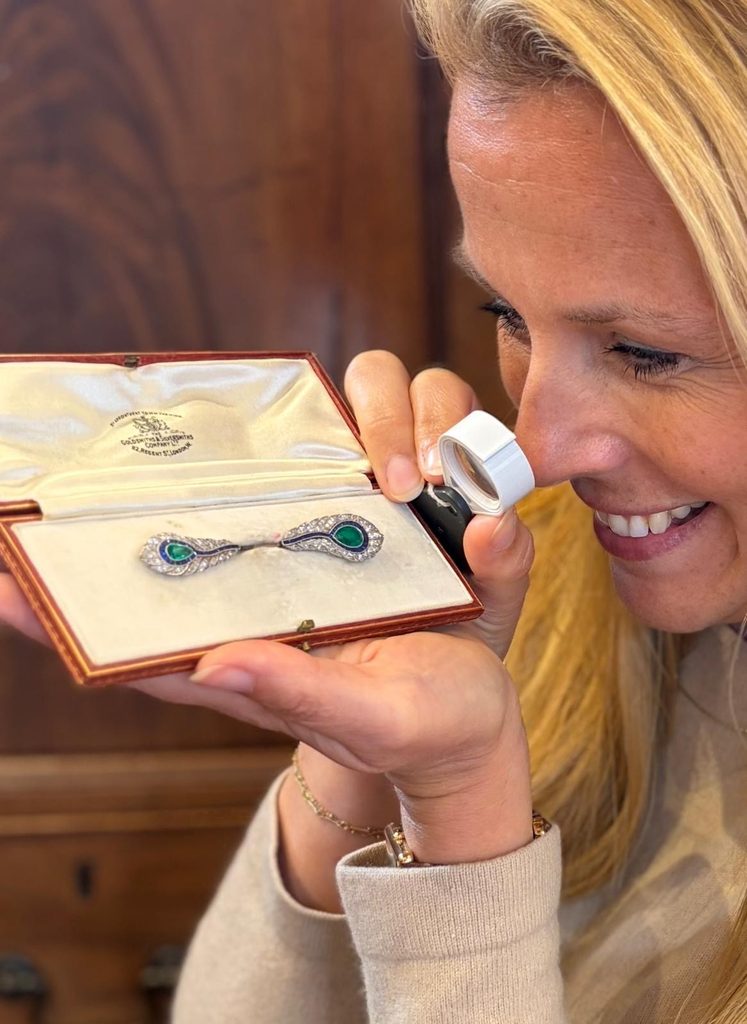
A jabot pin is a distinctive piece of jewellery featuring two gem-set ends connected by a hidden pin beneath the fabric of the wearer’s clothes, creating the illusion that the ends are floating. They first became popular in the 17th century, before being revived in the 1920s, which is when this piece was made. Each feather featured a pear-cut emerald as its central ‘eye’, surrounded first by sapphires and then by old-cut diamonds, creating a piece that was not only exceptional but also unique.
The pin was consigned by a vendor in Cumbria, who was given it as a birthday present by her aunt, an intrepid lady who travelled extensively throughout her life and collected treasures along the way. As soon as our catalogue went live online, we were approached by numerous potential buyers, all fascinated by both the piece and its provenance. It was therefore no surprise when it achieved the top price on day one of our Fine Jewellery and Silver auction, selling for £12,000 plus fees to a buyer in Southern England.
The second day of the auction saw two equally impressive results.
First under the hammer was a William & Mary walnut and oyster-veneered marquetry cabinet on stand, inlaid with an abundance of floral motifs and green-stained bone panels in the manner of 17th century Dutch cabinet maker Jan van Mekeren. The cupboard doors featured two beautiful marquetry vignettes depicting a courting couple and a chariot scene, and opened to reveal a lovely oyster-veneered arrangement of twelve drawers surrounding a central cupboard door, which itself enclosed further drawers.
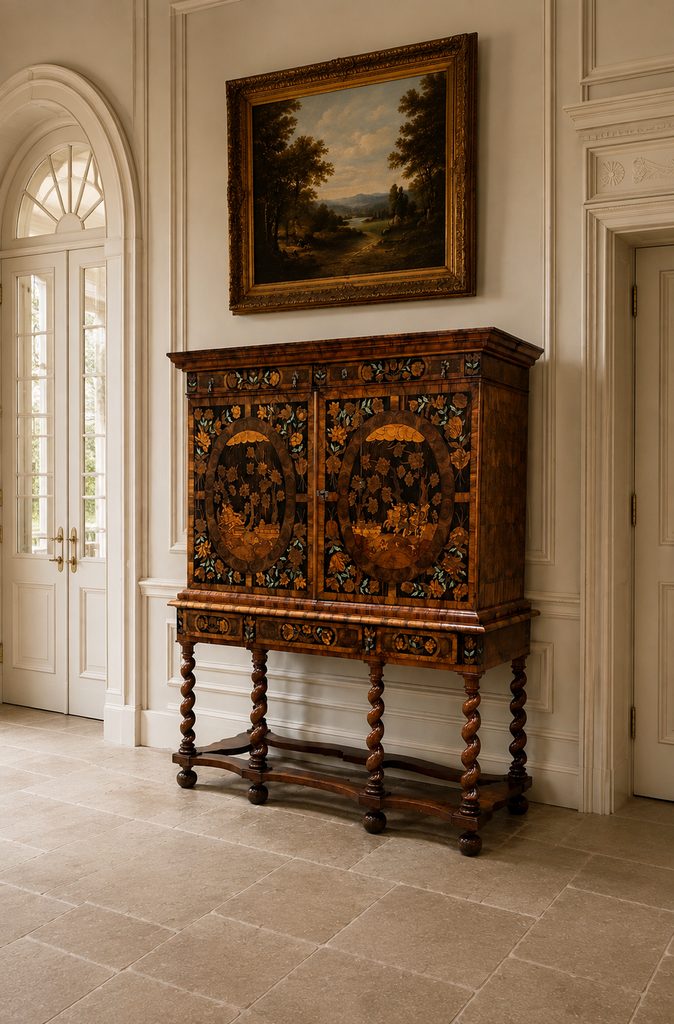
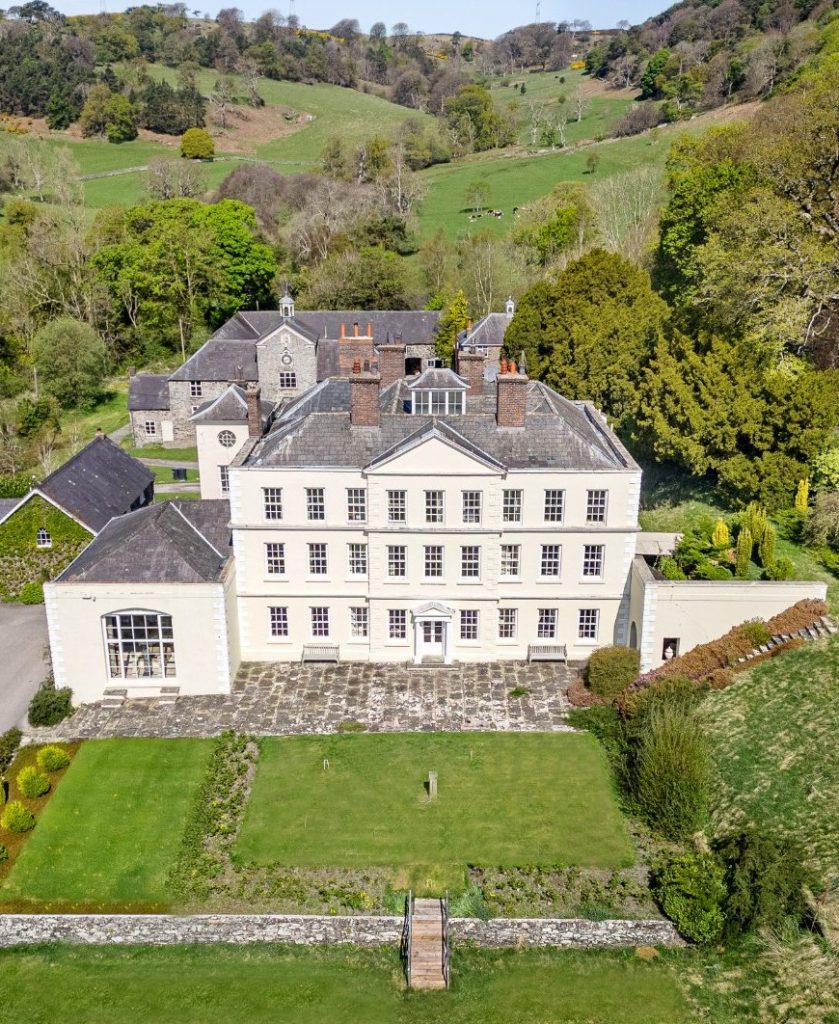
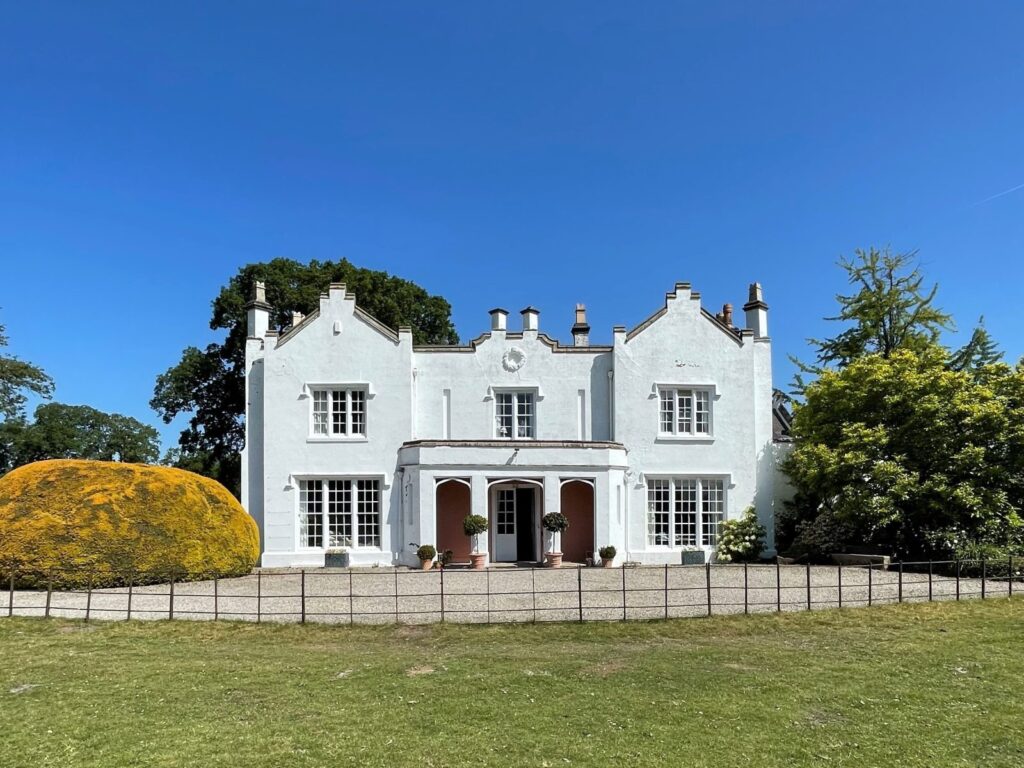
The piece had been part of the Plas Power estate near Wrexham for generations, but was now in need of a new home. Potential buyers were keen to oblige, and the cabinet attracted international interest, but after a fierce bidding battle, it eventually sold to a British buyer for £14,000 plus fees.
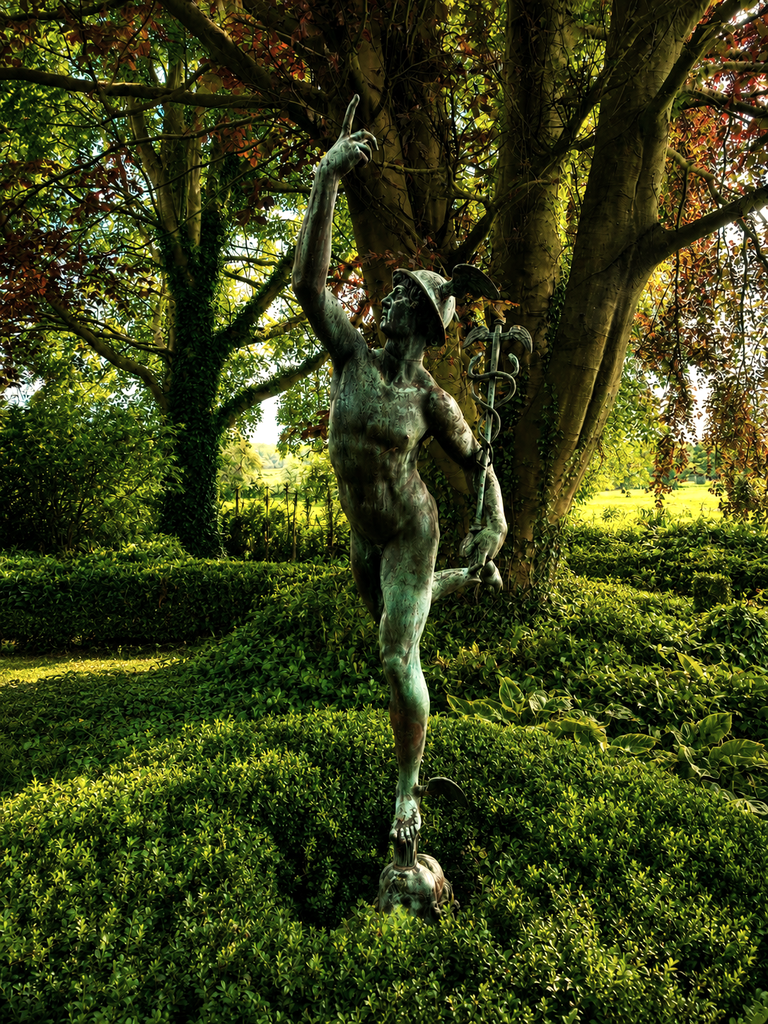
Last, but by no means least, came a wonderful bronze statue of the Roman god Mercury, modelled after a work by the 16th-century Italian sculptor Giambologna. Mercury was the god of many things, including commerce, eloquence, luck, thieves and trickery, but is perhaps best known as the fleet-footed messenger of the gods. His Greek equivalent is Hermes, which explains the name of a certain well-known delivery company!
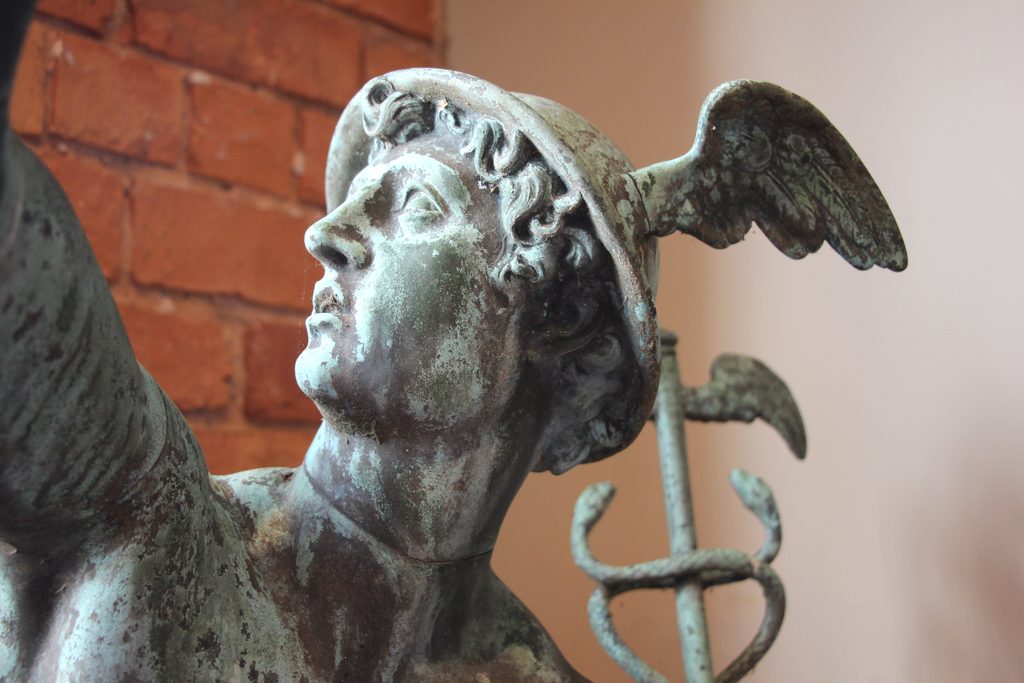
At nearly two metres tall, this was a truly impressive piece, depicting the god with winged helmet and heels, held aloft on a gust of wind blown by the wind god Boreas. He had stood for many years outside a farmhouse in Market Drayton, where he had acquired a gorgeous verdigris patina, but time had also taken its toll, and he was now loose on his plinth and unable to support himself.
Despite this, bidders fought hard for him in a protracted ten-minute bidding battle, and he finally sold for £13,000 plus fees to a buyer in South Shropshire.
It would have been wonderful to have had any one of these three beautiful pieces as the star lot of an auction, but to have all three in the same sale was truly exceptional. It made our September auction one of my highlights of the year so far, and now I can’t wait to see what treasures our October auction brings…
Trevanion Auctioneers will hold their next auction on 21st and 22nd October. To book a valuation appointment, call 01948 800202.