Some pieces of jewellery are so impressive I can glimpse them from the other side of the room and my heart starts racing! This was certainly the case with an extraordinary French Art Deco ring that came into the auction house last month – having been called by my jewellery specialist Amelia, I walked into the cataloguers’ office to be met by what appeared to be one of the biggest emeralds I’d ever seen.
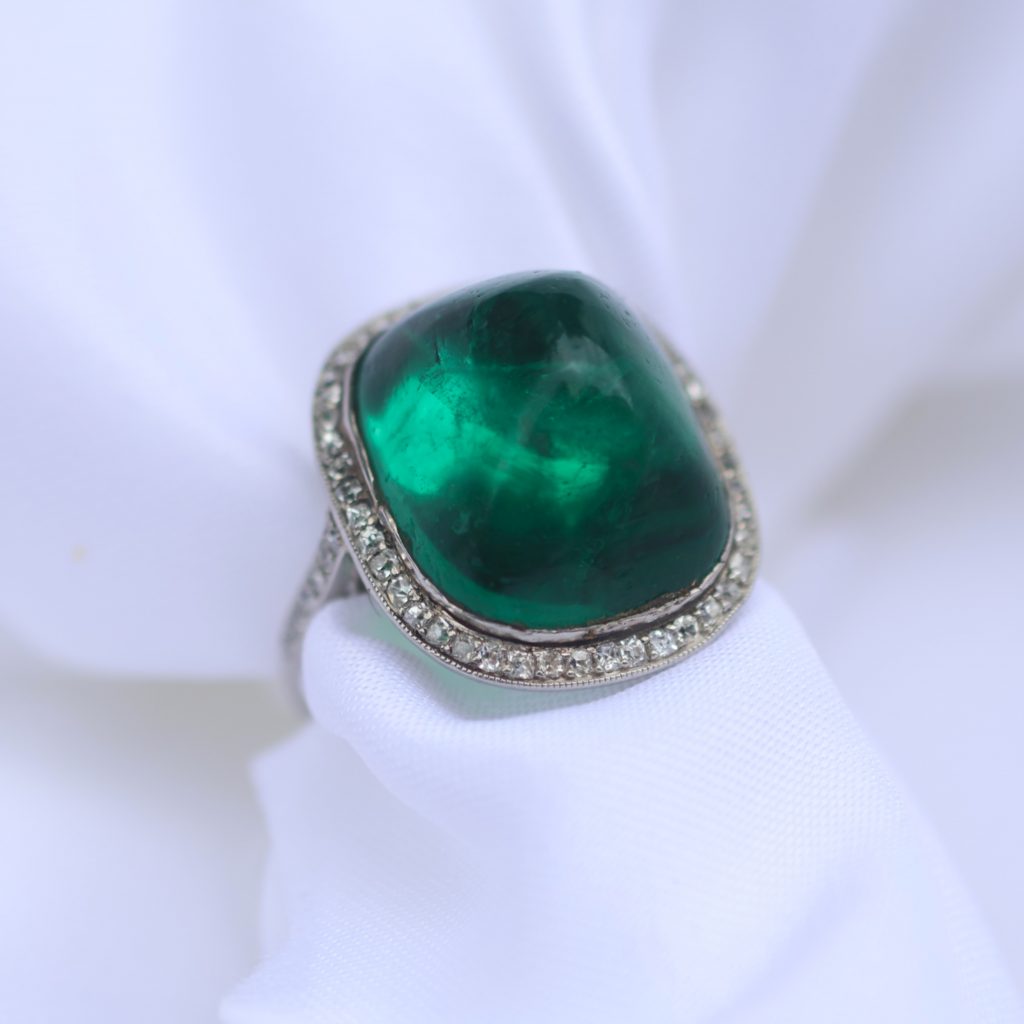
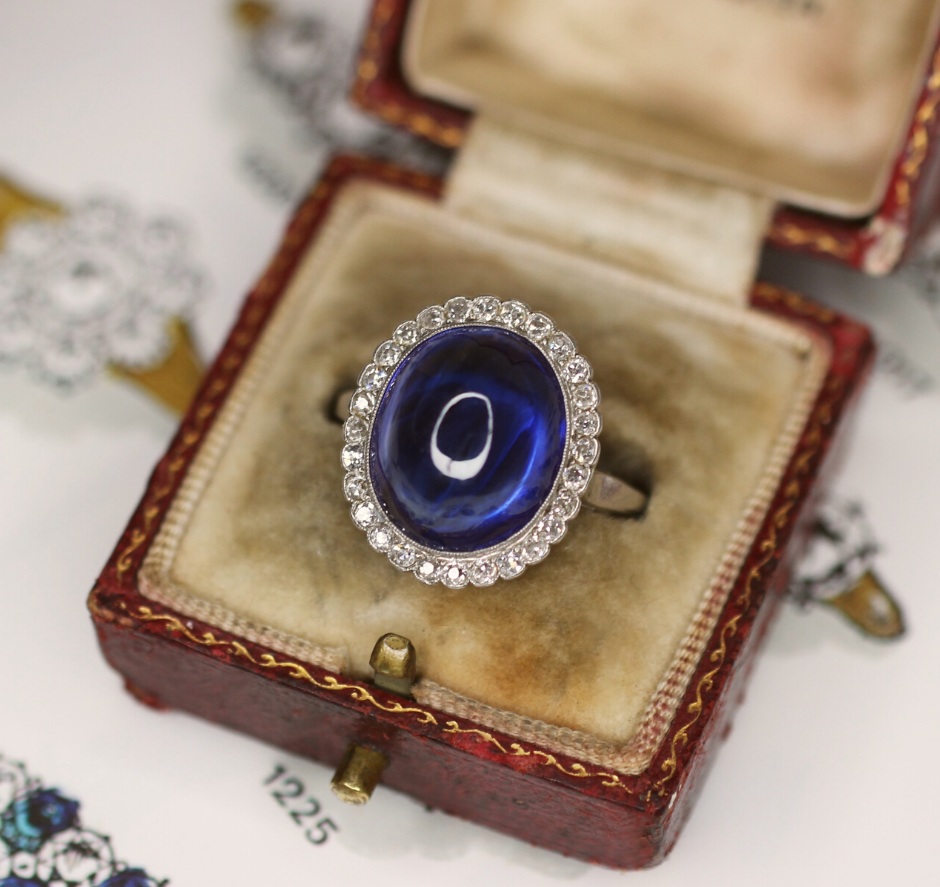
The spectacular ring featured a huge central sugarloaf cut green coloured stone, surrounded by old cut diamonds in a milgrain setting edge, above diamond set shoulders and a florally engraved under bezel. It looked amazing, but Amelia and I knew we had to answer a key question – was it actually an emerald? Amelia got to work.
On the positive side, the stone was a sugar loaf cut. This is a classic cut for early 20th century emeralds, and a good start. Then there was the ring itself. Made of platinum, it was top quality in all respects, with a French platinum stamp to the exterior, and further stamps to the interior, again all positive indicators. And the stone looked fantastic too – it had a good Jardin (the name given to the patterns of inclusions which characterise an emerald). Everything was looking right. But when Amelia started testing the stone, things got a little more complicated.
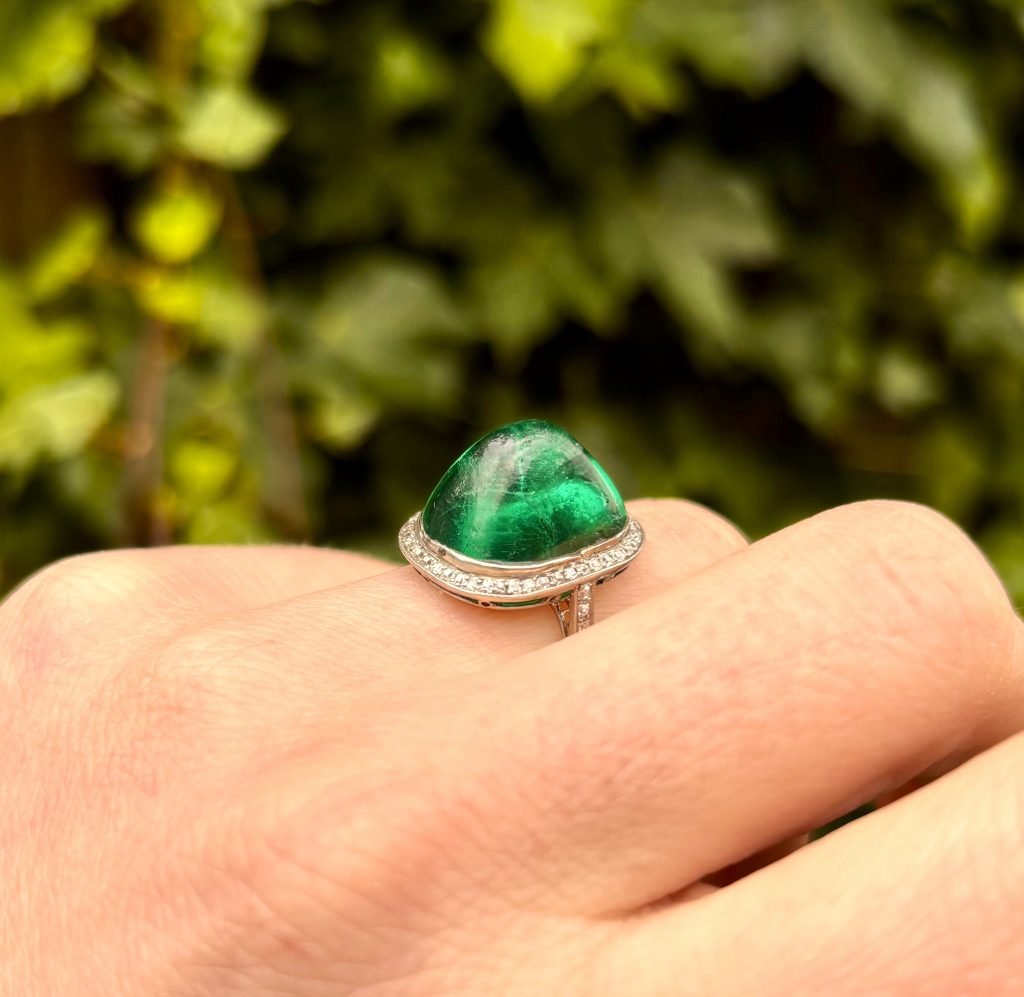
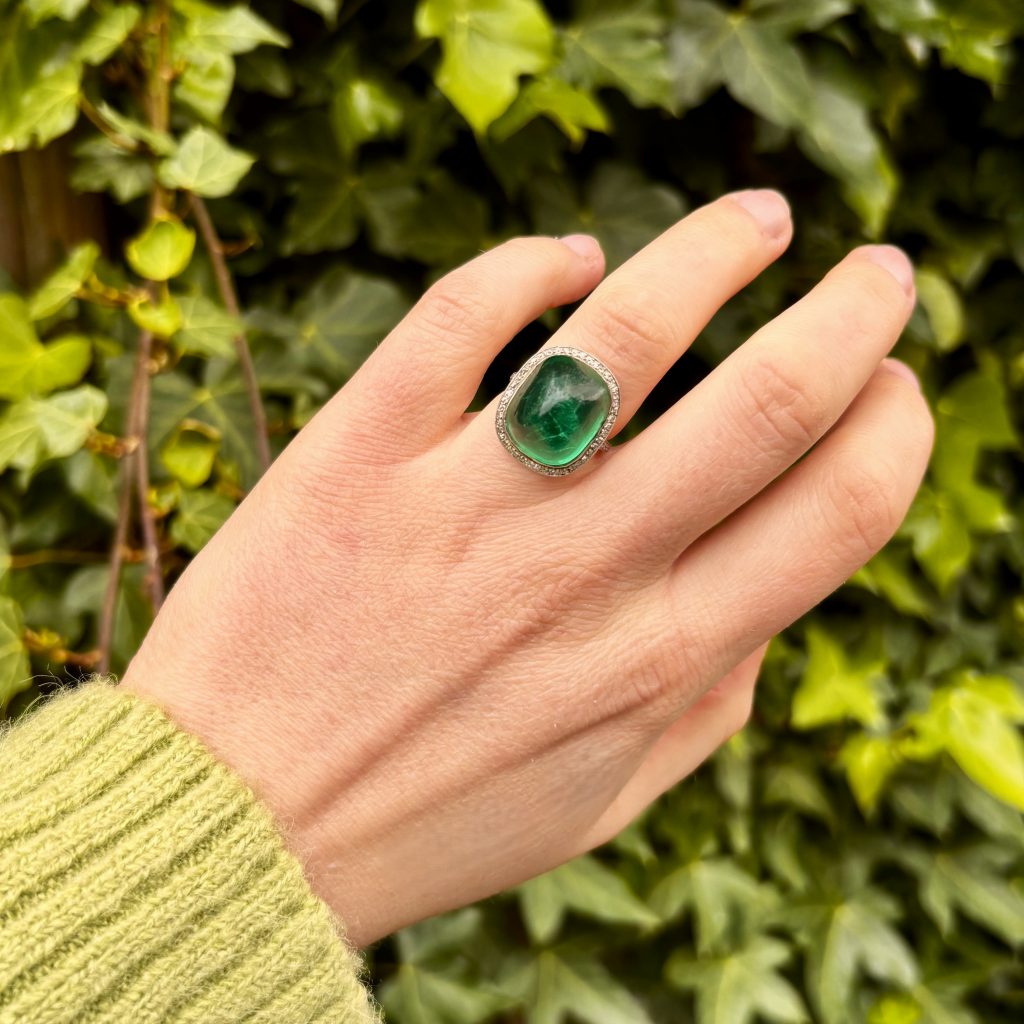
Amelia expected the stone to test positive for chromium, the trace element which gives emeralds their distinctive green colour, but instead her tests were negative. And although the Jardin initially looked good, examination under a microscope showed that although most of the inclusions were natural – as you’d expect in an emerald – some were more uniform. Uniform inclusions indicate that a stone is synthetic and usually appear throughout, but in this case there were just a few scattered among the natural inclusions, which was both unusual and confusing!
With more questions than answers, Amelia invited second opinions from other gemmologists, and their opinions were… inconclusive! No-one could say definitively one way or the other if the stone was an emerald or not – a highly unusual state of affairs indeed.
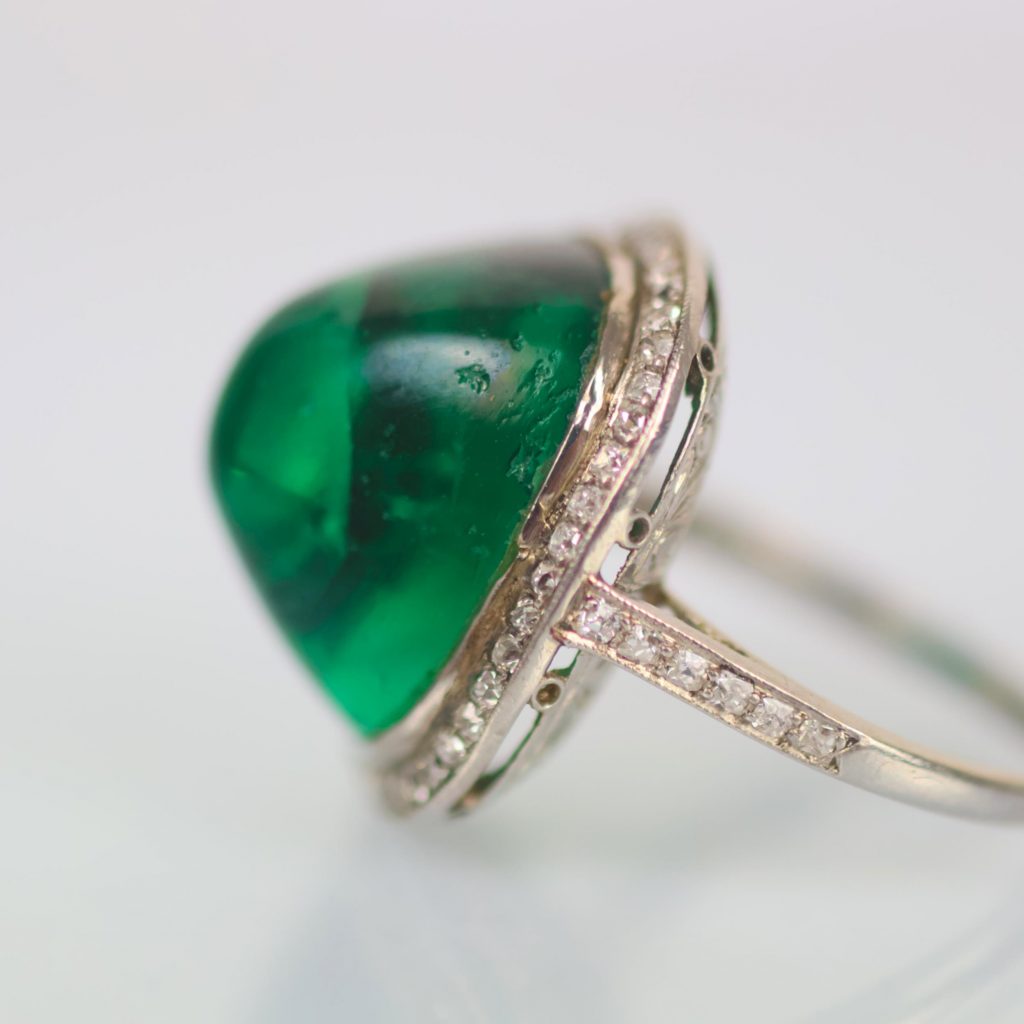
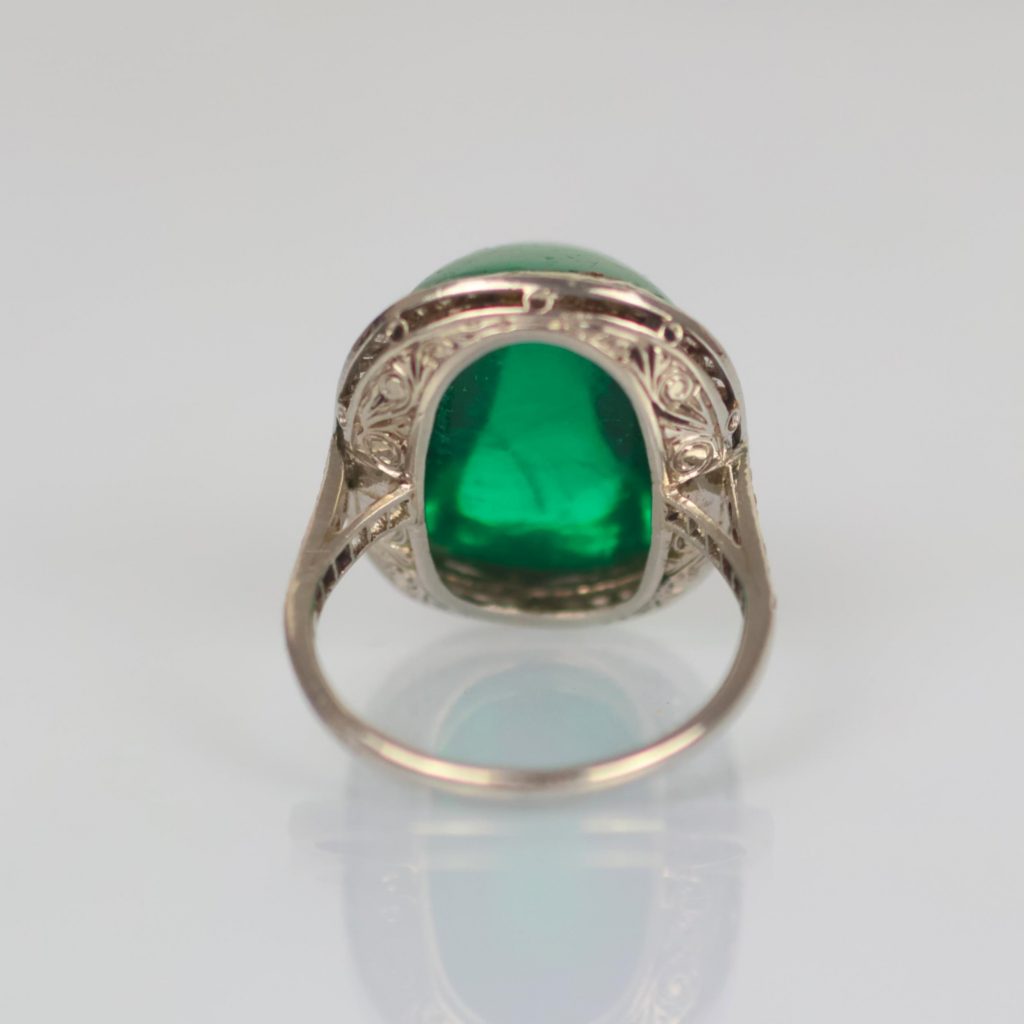
With so many questions and very few answers, Amelia and I agreed that the only way to proceed was to catalogue the ring as a ‘green coloured stone’. You might think that such a nondescript description would put potential buyers off, but instead the interest in the piece proved phenomenal, with buyers from around the world registering to bid on it. When it came up at the auction, bidding was fierce both online and in the room, and it eventually sold for £8000 plus fees – a fantastic result for the delighted vendor.
So, what have we learnt from this beautiful ring? Well first, that in the world of jewellery, things are not always straightforward. And second, that even when a stone may not be what it seems, if you set it in a beautiful ring and create something with real presence, what it’s made of matters a lot less than what it looks like!