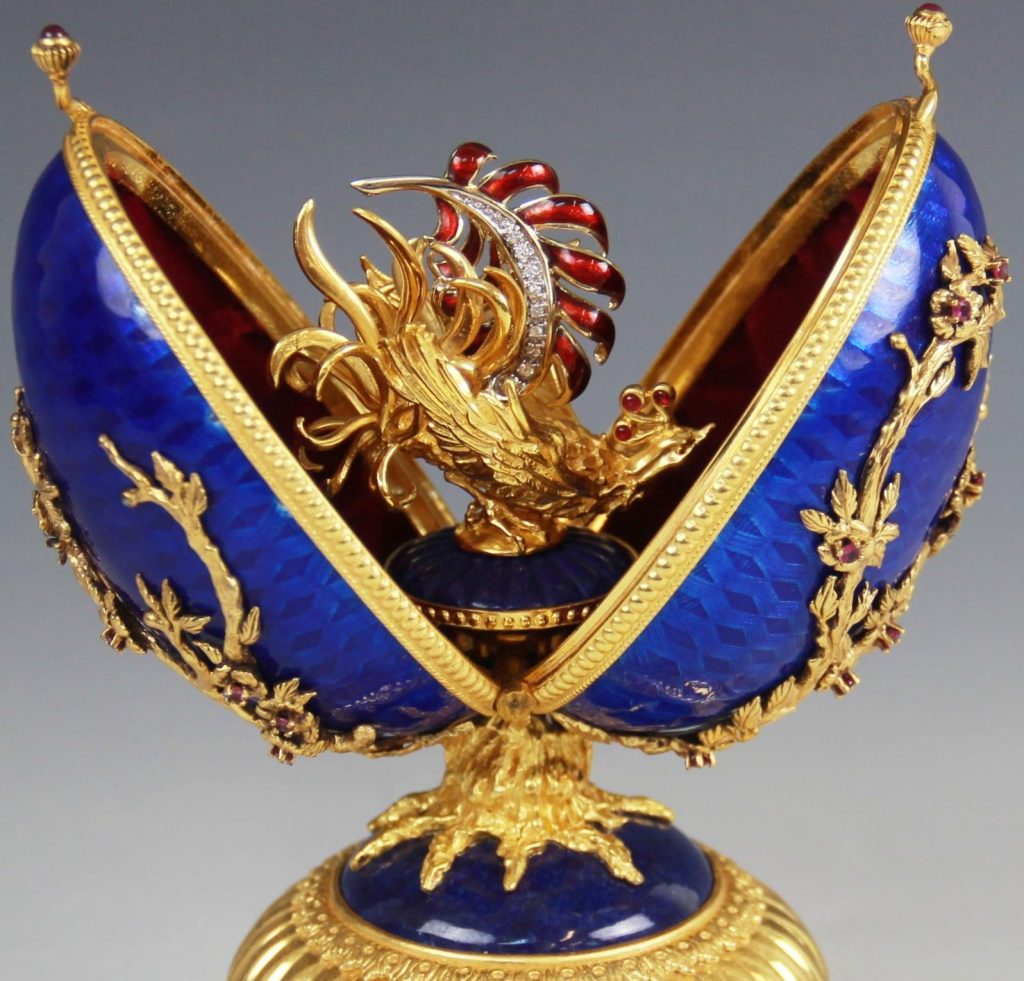
As a reformed chocoholic, Easter is a very conflicted time for me. I love the thought of working my way through a huge basket of chocolate eggs, but I also know that I can’t succumb, and so finding ways to distract myself becomes essential. This is when I turn to my favourite Easter treats – the fifty iconic Imperial Easter eggs created by Peter Carl Fabergé for the Russian Imperial family in the late 19th and early 20th century.
The story of the eggs begins in 1885, when Tsar Alexander III instructed goldsmith Peter Carl Faberge to create an Easter present for his wife, Tsarina Maria Feodorovna. Easter was the most important religious festival in the calendar of the Russian Orthodox Church, so this was not to be just a simple gift – the Tsar’s aim was to dazzle and delight his wife, and in doing so demonstrate his commitment to the church. Faberge was therefore instructed to somehow secrete a ruby pendant inside the egg, which would then open to reveal the surprise.
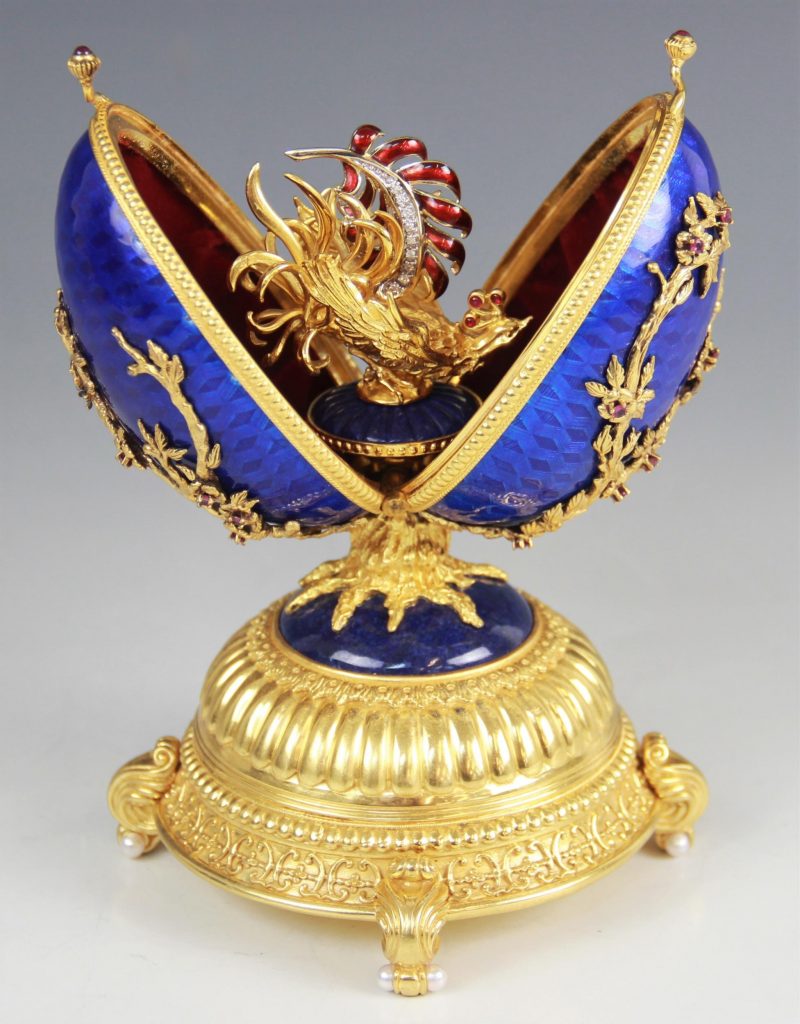
Faberge’s egg was a triumph, and Alexander immediately appointed him Goldsmith By Special Appointment To The Imperial Crown, charged with providing an egg every Easter. His commission doubled with the accession of Alexander’s son Nicholas II, as he was then required to make two eggs, one for Nicholas’s wife and another for his mother.
Faberge had pretty much free reign in the creation of the eggs, the only requirement being that each should contain a surprise. But expectations for the eggs grew with each passing year, and the pressure to trump last year’s offering must have been extraordinary. From the first (admittedly stunning) hen’s egg, the eggs became ever more ornate and complex, culminating in the extraordinary Romanov Tercentenary Egg of 1913, which was encrusted with portrait miniatures of the eighteen Romanov Tsars, celebrating three hundred years of Romanov rule in Russia.
Things changed abruptly with the outbreak of World War I, with 1915’s Red Cross Portraits Egg and Red Cross Triptych Egg paying tribute to the service rendered to the Red Cross by Tsarina Marie Feodorovna and other women of the Imperial court, and 1916’s Steel Military Egg reflecting Nicholas’s presence at the front with a beautiful but austere egg mounted on artillery shells.
Nicholas abdicated in March 1917 at the outbreak of the Bolshevik revolution, and was executed with his entire family in July the following year. Russia changed almost overnight, and Faberge’s eggs became a symbol of the past glories and tragic fall of the Romanov dynasty.
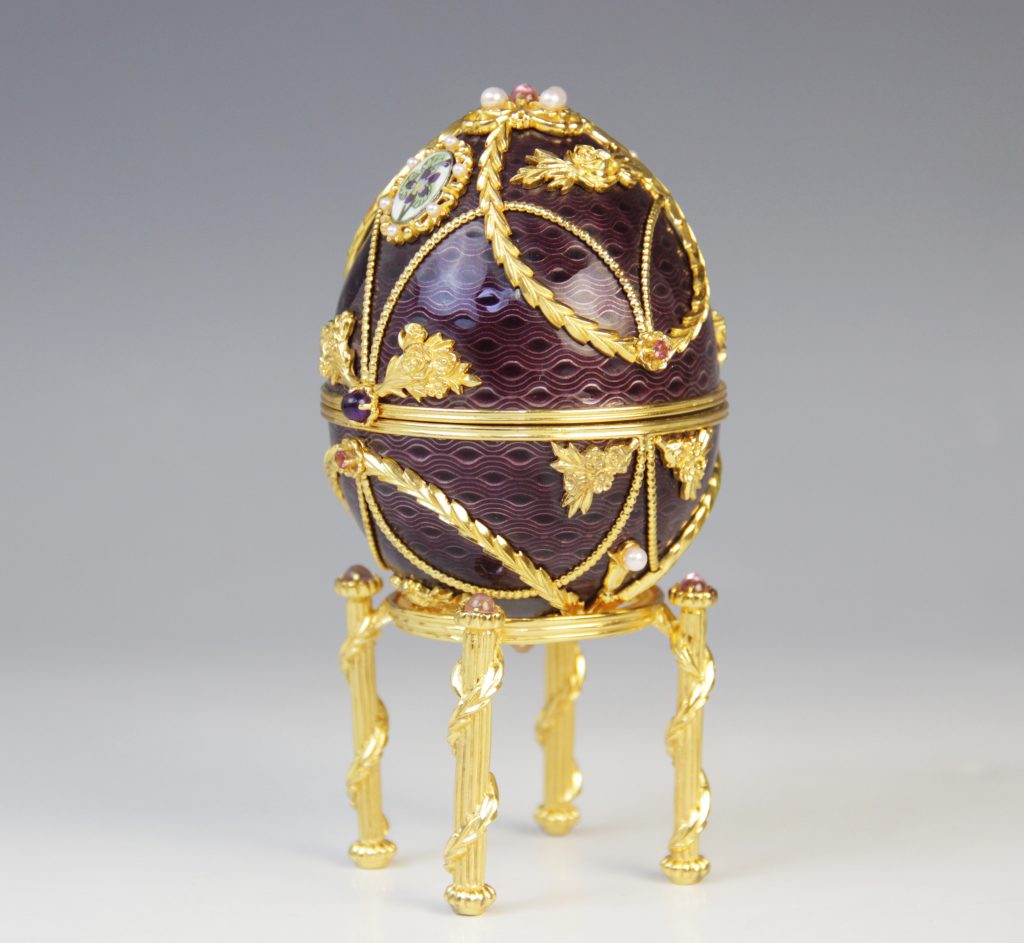
Genuine Faberge Imperial Easter Eggs almost never come to market, and when they do, they sell for millions, but it is possible to share in their history with a well-made replica. I’ve sold several examples at auction in the last few years, and each time it makes me marvel at the skill and creativity of goldsmiths like Faberge, and wonder at an age the like of which we may never see again.
Trevanion Auctioneers will hold their next auction on 29th & 30th April. To book a valuation appointment call 01948 800 202.